The Afterlife of a Tablet: Following Unused Antibiotics From Cabinet to Waterway
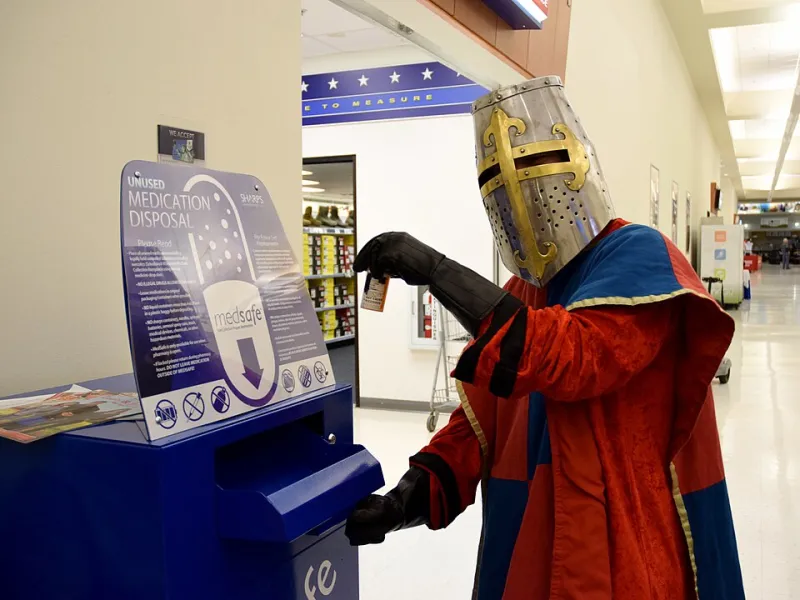
Photo: U.S. Air Force photo by null, Public domain, via Wikimedia Commons
The half-used blister pack
Most American households have one: a blister pack with three tablets missing, a bottle with a faded label, a liquid antibiotic that seemed important at the time and now sits behind the vitamins. The medication is easy to ignore until a cabinet cleanout forces a decision. Then comes the familiar fork in the road—sink or trash.
Both routes are common. Both are understandable. Neither is ideal for antibiotics.
A discarded tablet does not vanish when it leaves the house. It enters a waste stream. What happens next depends on the chemical, the formulation, the disposal route, and the treatment infrastructure that receives it. The journey is worth understanding because it connects a private cabinet decision to a public environmental question.
Down the drain: the wastewater route
When an antibiotic is rinsed down a sink or toilet, it travels through household plumbing into the wastewater system. Treatment plants are designed to remove pathogens, suspended solids, and many conventional pollutants. They are not designed to remove every trace of every pharmaceutical.
Some antibiotic compounds break down readily. Others persist through treatment and appear in treated effluent discharged to rivers, lakes, or estuaries. Some also bind to sludge, which may later be applied to land as biosolids or sent to a landfill. The concentrations involved are typically very low—measured in nanograms or micrograms per liter rather than therapeutic doses. That distinction matters. Drinking-water exposures at detected trace levels are not comparable to swallowing a prescribed tablet.
But low concentration is not the same as no consequence. Environmental scientists worry about chronic, low-level exposure in aquatic systems, where bacteria and other organisms may be under subtle selective pressure. The concern is less about a person developing an infection from tap water and more about the broader ecology of resistance: the more often antimicrobial compounds enter environmental compartments, the more opportunities exist for resistance genes to move and persist.
The trash route: landfills and leachate
Throwing antibiotics in the household trash is sometimes recommended when take-back options are unavailable, but it is not a neutral act. Modern landfills are engineered containment systems, yet liquids still percolate through waste and form leachate, which must be collected and treated. Pharmaceutical residues can be part of that leachate load. Improperly sealed pills may also be accessible to children, pets, or scavengers before they ever reach the landfill.
The trash route is therefore a fallback, not a first choice. It should be done carefully: keep the medication in its original container if possible, remove or obscure personal information, add an unpalatable substance such as used coffee grounds or cat litter, seal the container in a bag, and place it in the household trash—not in recycling. Never crush tablets or open capsules unless a pharmacist or official instructions specifically direct it.
What trace levels do and do not mean
Claims about antibiotics in water can swing between complacency and panic. The evidence supports neither extreme. Researchers have detected various pharmaceuticals, including antibiotics, in wastewater, surface water, and occasionally drinking-water sources at trace concentrations. Regulatory agencies and water utilities monitor and treat drinking water, and the detected levels of antibiotics are generally far below therapeutic doses.
At the same time, scientists continue to study whether long-term environmental exposure contributes to resistance selection and whether certain compounds pose risks to aquatic organisms. The honest summary is that trace antibiotic pollution is a real environmental concern with uncertain human-health significance at typical drinking-water levels—and a strong argument for keeping unused antibiotics out of drains whenever a better option exists.
The U.S. disposal playbook
Start with take-back. The Drug Enforcement Administration coordinates periodic National Prescription Drug Take Back Day events, and many communities have permanent collection sites at pharmacies, police departments, or municipal facilities. These sites are designed to accept controlled and non-controlled medications safely. Before driving over, confirm hours and accepted items; not every site accepts liquids or sharps.
Next, ask the pharmacy. Some retail pharmacies sell or provide mail-back envelopes that let patients send unused medications to an approved disposal facility. Direct-to-consumer pharmacies may include disposal guidance with an order; customers should ask specifically rather than assume. AntibioticSource500 encourages customers to use take-back options when available and to follow official instructions when they are not.
If no take-back option is realistic, use the trash method described above—but only for medications that are not on the FDA flush list. The flush list is a short, specific roster of medicines that pose a serious risk if one dose is taken by a child, pet, or someone else in the home. Most antibiotics are not on that list. Flushing should be reserved for medications that genuinely warrant it, not used as a convenient default.
The cabinet rule that prevents the problem
Disposal is the cleanup crew, not the prevention plan. The better approach is to avoid accumulating antibiotics in the first place. Fill only the quantity prescribed, take the medication exactly as directed, and do not save leftovers for a future self-diagnosis. If a prescriber changes therapy or a course is discontinued, ask the pharmacy how to dispose of the remainder.
A tablet that leaves the cabinet through a take-back program is a tablet that does not become a household temptation or an environmental input. That is not a dramatic victory, but it is a clean one.