America's Silent Epidemic: Understanding Antibiotic Resistance and What You Can Do About It
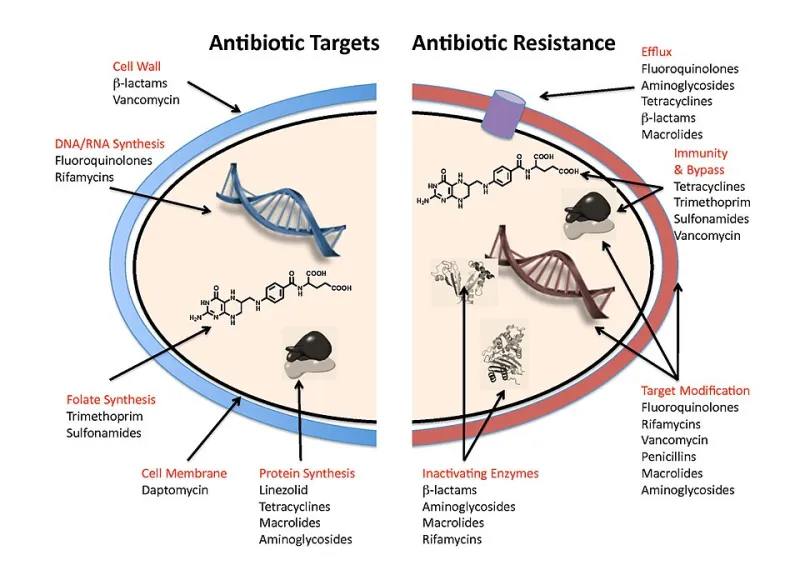
Photo: Gerard D Wright, CC BY 2.0, via Wikimedia Commons
For most of the twentieth century, antibiotics were medicine's greatest triumph. Infections that once claimed lives — strep throat, pneumonia, wound infections — became manageable, even routine. Yet decades of widespread, and often careless, antibiotic use have given rise to a sobering counterforce: bacteria that no longer respond to the drugs designed to destroy them. In 2024, antimicrobial resistance (AMR) stands as one of the most pressing public health challenges facing Americans, and the warning signs are everywhere.
According to the Centers for Disease Control and Prevention (CDC), more than 2.8 million antibiotic-resistant infections occur in the United States each year, resulting in over 35,000 deaths. Globally, the World Health Organization (WHO) has designated AMR as one of the top ten threats to human health. These are not abstract statistics — they represent neighbors, coworkers, and family members whose infections became difficult or impossible to treat with standard therapies.
How Resistance Develops: A Biological Arms Race
To understand why this crisis has unfolded, it helps to understand the biology behind it. Bacteria reproduce at extraordinary speed. When exposed to an antibiotic, most organisms in a given population are killed — but a small fraction may carry genetic mutations that allow them to survive. These survivors reproduce, passing their resistance traits to subsequent generations. Over time, the resistant strain becomes dominant.
This process is entirely natural, but human behavior has dramatically accelerated it. Every unnecessary antibiotic prescription, every course of treatment abandoned midway, and every instance of antibiotics used to treat viral illnesses — for which they have no effect whatsoever — creates additional selective pressure that favors resistant strains.
Dr. Emily Hartman, an infectious disease specialist based in Chicago, describes the situation plainly: "We have essentially been training bacteria to outsmart our best medications. The overuse of antibiotics in both human medicine and agricultural settings has created an environment where resistance is not just possible — it's inevitable if we don't change course."
The Prescription Problem in American Medicine
The United States has one of the highest rates of antibiotic prescribing among developed nations. Studies suggest that nearly 30 percent of outpatient antibiotic prescriptions written in the US are unnecessary — often for conditions like the common cold, flu, or bronchitis that are caused by viruses and therefore unaffected by antibiotics.
The reasons are multifaceted. Patients frequently expect or even demand antibiotic treatment when they visit a physician feeling unwell. Busy clinicians, under time pressure and eager to satisfy patients, sometimes prescribe antibiotics as a precaution. In some underserved communities, access to reliable diagnostic testing is limited, making it difficult to distinguish bacterial from viral infections quickly.
Agricultural use compounds the problem. Antibiotics are widely administered to livestock in the US — not only to treat illness but to promote growth. This practice introduces antimicrobial agents into the broader environment, contributing to the proliferation of resistant organisms that can eventually reach human populations through food, water, and direct contact.
Superbugs Entering American Communities
Resistant organisms once largely confined to hospital settings are increasingly being detected in community environments. Methicillin-resistant Staphylococcus aureus (MRSA), for example, was historically associated with healthcare facilities. Today, community-acquired MRSA infections appear in gyms, schools, and households across the country.
Similarly, drug-resistant strains of E. coli, Klebsiella pneumoniae, and Clostridioides difficile are being identified with growing frequency in outpatient settings. The implications are significant: Americans can no longer assume that a standard antibiotic course will reliably resolve a bacterial infection.
Practical Steps Every American Can Take
While systemic change requires policy action and medical reform, individuals are far from powerless. Responsible antimicrobial stewardship begins at the personal level, and the choices you make today have a direct bearing on public health outcomes tomorrow.
Use antibiotics only when prescribed — and complete the full course. Never take antibiotics left over from a previous prescription, and never share them with another person. Incomplete treatment courses allow partially resistant bacteria to survive and proliferate.
Advocate for diagnostic clarity. When you visit a healthcare provider with symptoms of infection, ask whether a diagnostic test can confirm whether your illness is bacterial or viral before accepting a prescription. Many clinics now offer rapid strep and flu tests that can guide this decision within minutes.
Practice rigorous hygiene. Handwashing remains one of the single most effective tools for preventing infection transmission. Regular, thorough handwashing with soap and water — particularly before eating and after using restrooms or caring for sick individuals — dramatically reduces the spread of both resistant and non-resistant pathogens.
Be informed about food sourcing. Choosing meat and poultry products labeled "raised without antibiotics" or certified organic reduces your exposure to resistant organisms introduced through agricultural antibiotic use. While this is not always financially accessible for every household, awareness of the connection is an important first step.
Stay current on vaccinations. Vaccines prevent bacterial and viral infections alike, reducing the overall demand for antibiotic treatment. Immunization against influenza, pneumococcal disease, and other preventable illnesses keeps individuals healthier and collectively reduces pressure on the antibiotic supply.
Support antimicrobial stewardship programs. Many hospitals and healthcare networks have implemented formal stewardship programs that monitor and optimize antibiotic prescribing. Patients who ask questions, read educational materials, and engage with these programs contribute to a culture of responsible use.
The Role of Education in Turning the Tide
At AntibioticSource500, we believe that access to accurate, transparent information is foundational to responsible antimicrobial use. Understanding what antibiotics can and cannot do — and recognizing the long-term consequences of misuse — empowers individuals to make decisions that protect both their own health and the broader community.
The rise of antibiotic resistance is not an irreversible fate. It is the product of accumulated choices, and it can be addressed through accumulated better choices. Researchers are actively developing new classes of antimicrobial agents, phage therapies, and novel diagnostic technologies. But scientific innovation alone cannot outpace the problem if prescribing habits and public behavior do not change in parallel.
The bacteria are evolving. The question is whether our understanding and our practices will evolve alongside them — or fall behind. In 2024, the answer to that question begins with each of us.