Four Paws, One Household: How Veterinary Antimicrobial Prescriptions Affect the Entire Family's Health
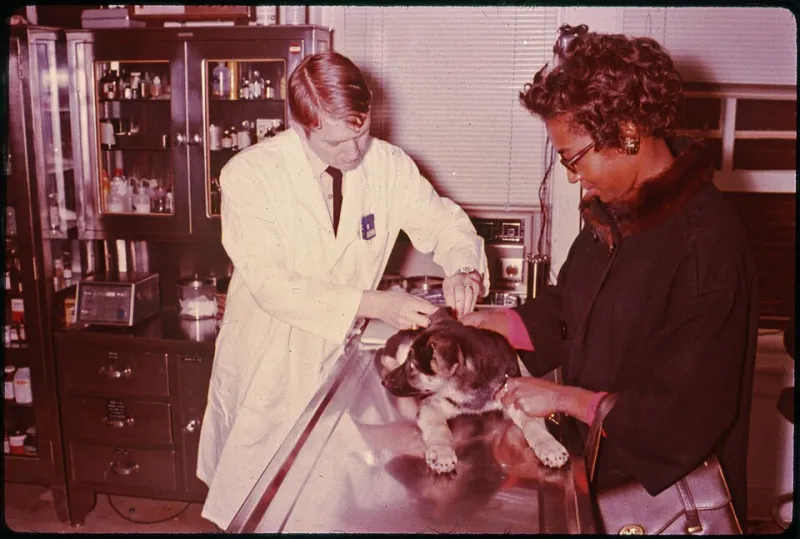
Photo: National Museum of Health and Medicine, CC BY 2.0, via Wikimedia Commons
America is a nation of pet owners. According to the American Pet Products Association, approximately 67 percent of U.S. households — roughly 90 million homes — include at least one companion animal. Dogs, cats, rabbits, and even reptiles share living spaces, furniture, and sometimes food bowls with their human families. That closeness is one of the great joys of pet ownership. It is also, from a public health perspective, a variable that deserves considerably more attention than it typically receives.
When a veterinarian prescribes an antibiotic for a sick pet, the medication enters the household ecosystem. Resistant bacteria do not observe the boundary between species. Understanding how veterinary antimicrobial decisions ripple outward — and what families can do to manage the associated risks — is a matter of genuine importance for household wellness.
Why Animals Get Bacterial Infections in the First Place
Companion animals are susceptible to bacterial infections for many of the same reasons humans are: compromised immunity, wounds, dental disease, urinary tract issues, and respiratory illness. Dogs frequently develop skin fold infections, ear canal infections caused by Staphylococcus pseudintermedius, and post-surgical wound complications. Cats commonly present with bite wound abscesses, upper respiratory bacterial superinfections, and urinary tract infections. Even small mammals and reptiles carry distinctive bacterial flora that can, under the right circumstances, become pathogenic.
Veterinarians in the United States prescribe antibiotics from many of the same drug classes used in human medicine — fluoroquinolones, beta-lactams, tetracyclines, and sulfonamides among them. This overlap is not incidental; it is central to why veterinary prescribing habits matter for human health.
The Resistance Connection: Shared Drugs, Shared Consequences
Antibiotic resistance develops when bacteria are exposed to antimicrobial agents and the susceptible strains are eliminated while resistant mutants survive and reproduce. This process occurs in animals just as readily as it does in people. When a pet undergoes a course of antibiotics, resistant bacterial strains can colonize the animal's gut, skin, or nasal passages — and then transfer to human household members through routine contact.
Research published in peer-reviewed veterinary and infectious disease journals has documented the transmission of methicillin-resistant Staphylococcus aureus (MRSA) and methicillin-resistant Staphylococcus pseudintermedius (MRSP) between pets and their owners. These are not theoretical scenarios. Households where pets have received repeated antibiotic courses — particularly for chronic skin conditions — show measurably higher rates of resistant bacterial carriage among human residents.
The mechanism is straightforward: petting, cuddling, sharing sleeping surfaces, and allowing animals to lick wounds or faces all create transfer opportunities. Resistant organisms that colonize a pet's coat or mucous membranes can establish themselves on human skin or in the human microbiome without causing immediate illness — but they represent a reservoir that can become clinically significant if the human host's immunity is compromised.
Zoonotic Infections: When the Boundary Between Species Disappears
Beyond resistance transfer, certain bacterial infections can cross directly from animals to humans — a category of disease known as zoonotic infection. Several are relevant to American pet owners:
- Pasteurella multocida: Commonly transmitted through cat and dog bites or scratches, this bacterium causes rapidly progressing wound infections in humans, particularly in immunocompromised individuals or those with liver disease.
- Capnocytophaga canimorsus: Present in the oral flora of healthy dogs and cats, this organism can cause life-threatening sepsis in people who are asplenic or otherwise immunocompromised following even minor bites.
- Campylobacter and Salmonella: Both are carried asymptomatically by many household pets, including reptiles and young dogs, and can cause significant gastrointestinal illness in humans through fecal-oral routes.
- Bartonella henselae: The causative agent of cat scratch disease, transmitted through scratches or bites from bacteremic cats, particularly kittens.
None of these pathogens require a sick-looking animal to pose a risk. Many pets carry these organisms without visible signs of illness, which is precisely what makes awareness so important.
Handling Pet Medications Safely
If your veterinarian prescribes an antibiotic for your companion animal, a few practical measures significantly reduce the risk of resistance transfer and accidental human exposure.
Complete the full course. Stopping a pet's antibiotic prescription early — because the animal appears improved — is one of the most reliable ways to cultivate resistant bacterial populations. The same principle that applies to human prescriptions applies here: partial treatment selects for survivors.
Use gloves when administering oral liquid antibiotics or applying topical antimicrobial preparations. Many pet owners handle these medications casually, not recognizing that skin absorption and incidental ingestion represent genuine exposure pathways.
Store pet medications separately from human medications. Accidental mix-ups, while uncommon, do occur — particularly in homes with children or elderly residents. Dedicated storage, clearly labeled, prevents confusion.
Wash hands thoroughly after administering any medication, cleaning wounds, or handling bandages. This single habit interrupts the most common transfer pathway.
Dispose of unused pet antibiotics properly. The FDA's guidance on medication disposal — including take-back programs and approved household disposal methods — applies to veterinary drugs as much as it does to human prescriptions. Do not flush antibiotics down the drain unless the label specifically authorizes it, as pharmaceutical contamination of waterways contributes to environmental resistance pressures.
Wound Care for Pets: A Human Health Consideration
When pets sustain lacerations, surgical incisions, or bite wounds, the wound care process itself creates exposure opportunities. Infected animal wounds may harbor bacteria that are resistant to standard antimicrobials, particularly in animals with a history of recurrent infections and antibiotic treatment.
Anyone cleaning or dressing a pet's wound should treat the task with the same discipline applied to human wound care: gloves, clean technique, and prompt handwashing afterward. If a pet's wound produces purulent discharge, the material should be considered potentially infectious and handled accordingly — avoiding contact with mucous membranes, open cuts, or the eyes.
If a human household member sustains a bite or scratch wound while handling an ill animal, that wound warrants medical evaluation, particularly if the person is immunocompromised, elderly, diabetic, or has liver disease. Bite wounds from cats are statistically more likely to become infected than those from dogs, owing to the puncture depth and the bacterial load in feline oral flora.
Talking to Your Veterinarian About Antimicrobial Stewardship
Veterinary antimicrobial stewardship is an evolving discipline. Many veterinary practices now follow guidelines from the American Veterinary Medical Association (AVMA) and the World Organisation for Animal Health that encourage culture-and-sensitivity testing before prescribing, avoidance of critically important antibiotics for minor infections, and preference for narrow-spectrum agents where appropriate.
As a pet owner, you are entitled to ask your veterinarian why a specific antibiotic was chosen, whether culture testing is appropriate, and what alternatives might exist. These are not adversarial questions — they are the same questions a well-informed patient asks their physician. Veterinarians who practice thoughtful stewardship are protecting not only your pet but your household.
The Household as a Single Microbial Ecosystem
The most useful reframe for American pet owners may be this: your home is a single microbial ecosystem, and every antibiotic prescription — human or veterinary — shapes that ecosystem. Resistant organisms do not confine themselves to the species that originally hosted them. The decisions made in a veterinary clinic can, through entirely ordinary household contact, influence the bacterial landscape experienced by every person living under the same roof.
Recognizing this reality is not cause for alarm. It is cause for the kind of informed, practical attention that characterizes responsible household health management. Safe handling, completed courses, thoughtful storage, and open communication with both physicians and veterinarians are the tools available to every family — and they are genuinely effective when applied consistently.