Antibiotics Across Borders: The Traveler's Complete Guide to Carrying, Storing, and Planning Antimicrobial Medications Abroad
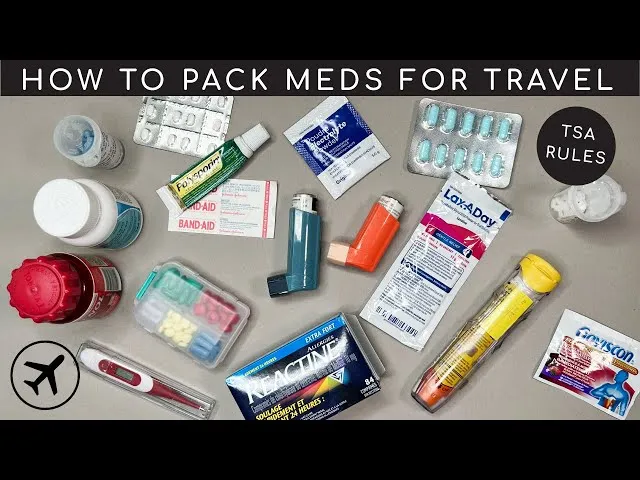
Photo: traveler packing prescription medications passport airport international travel, via i.ytimg.com
When Your Prescription Needs a Passport Plan
Every year, millions of Americans travel internationally—for business, leisure, humanitarian work, or family visits—and a significant portion of them carry prescribed medications, including antibiotics. While the logistics of traveling with a blood pressure medication or allergy prescription are relatively straightforward, antibiotics introduce a distinct set of considerations: variable international regulations, temperature stability requirements, customs scrutiny, and the very real possibility of needing them in a country where medical care looks very different from what you have at home.
This guide is designed for the prepared American traveler. Whether you are carrying a prophylactic antibiotic prescribed by your physician before a trip to Southeast Asia or a standard course of amoxicillin for a dental infection that began the week before departure, understanding the rules and practicalities of traveling with these medications can mean the difference between a smooth journey and a serious complication.
Domestic Travel: What TSA Actually Requires
Within the United States, traveling with prescription antibiotics is legally uncomplicated. The Transportation Security Administration does not prohibit passengers from carrying prescription medications in either carry-on or checked baggage. However, there are practical recommendations worth following.
First, keep medications in their original pharmacy-labeled containers. While the TSA does not legally require this for domestic flights, it significantly streamlines the screening process and provides instant verification of the medication's legitimacy if questions arise. Second, carry a copy of the original prescription or a letter from your prescribing physician, particularly for antibiotics that may raise questions—such as those used to treat sexually transmitted infections or medications that could theoretically be misused.
For liquid antibiotic formulations—common in pediatric prescriptions—the standard 3.4-ounce (100ml) liquid rule applies unless the medication is declared as a medically necessary liquid. In that case, quantities exceeding the standard limit are permitted, but they must be declared to a TSA officer at the checkpoint and may be subject to additional screening.
State-to-state travel by car or train carries no federal restrictions on carrying prescribed antibiotics. Each state has its own controlled substance regulations, but standard antibiotics are not classified as controlled substances under federal or state law in the United States.
International Travel: A Country-by-Country Reality
The moment you cross a U.S. border—or arrive in a foreign country—the regulatory landscape changes substantially. International customs rules regarding prescription medications vary widely, and antibiotics that are freely available over the counter in some countries are tightly regulated in others.
Several general principles apply across most international destinations:
Carry documentation. A letter from your prescribing physician on official letterhead, specifying your name, the medication name, dosage, and the medical necessity, is one of the most valuable documents you can carry. Many countries' customs agencies will accept this as sufficient evidence of legitimate medical use.
Research your specific destination. Countries such as Japan, the United Arab Emirates, and several Southeast Asian nations have particularly strict regulations regarding imported medications. Japan, for instance, requires advance customs approval (a Yakkan Shoumei certificate) for certain medications brought in quantities exceeding a one-month supply. The UAE has restrictions on medications that contain codeine or certain controlled compounds, but standard antibiotics are generally permissible with documentation.
Be aware of quantity limits. Most countries permit travelers to import a personal-use supply of prescription medication, typically defined as a 30 to 90-day supply. Carrying quantities that exceed personal use can trigger scrutiny and potential confiscation.
Check with the destination country's embassy. The most reliable source for current import regulations is the embassy or consulate of your destination country. Regulations change, and travel health websites—while useful—may not always reflect the most current rules.
The U.S. State Department's travel information portal (travel.state.gov) and the CDC's Travelers' Health website are also valuable resources for destination-specific health and medication guidance.
Temperature Control: The Challenge Most Travelers Overlook
Antibiotic efficacy is directly tied to proper storage. Most oral antibiotic tablets and capsules are formulated for storage at controlled room temperature—generally between 68°F and 77°F (20°C to 25°C)—with allowances for brief excursions up to 86°F (30°C). Liquid antibiotic suspensions, such as amoxicillin-clavulanate, often require refrigeration and have limited stability once reconstituted.
For travelers, this creates real logistical challenges. A checked bag in an aircraft cargo hold can reach temperatures well below freezing at cruising altitude. A carry-on bag left in a hot vehicle during a layover can expose medications to temperatures far exceeding safe limits. Extended stays in tropical climates without reliable refrigeration add further complexity.
Practical strategies include:
- Keeping antibiotics in your carry-on baggage rather than checked luggage, where temperature extremes are more pronounced and uncontrolled.
- Using insulated medication cases with gel packs for temperature-sensitive formulations. These are widely available from pharmacy retailers and travel health suppliers.
- Requesting refrigerated storage at your hotel or accommodation for liquid formulations. Most hotels, even in developing countries, can accommodate this request.
- Consulting your pharmacist before departure about the specific stability profile of your antibiotic. Some formulations are more forgiving of temperature variation than others.
Planning for Infections You Haven't Had Yet
For travelers heading to regions where specific bacterial infections pose an elevated risk, proactive planning with a travel medicine physician is strongly advisable. Travel clinics, available in most major American cities, specialize in destination-specific risk assessment and can prescribe prophylactic or standby antibiotic regimens when appropriate.
Traveler's diarrhea, caused most commonly by enterotoxigenic E. coli, is among the most frequent bacterial illnesses affecting Americans abroad. A travel medicine physician may prescribe a standby course of azithromycin or ciprofloxacin to carry in case of need. Similarly, travelers to malaria-endemic regions may be prescribed doxycycline, which carries both antimalarial and antibacterial properties.
It is worth emphasizing that standby antibiotics should be used only when genuinely indicated—not as a precautionary measure at the first sign of minor digestive discomfort. Responsible use of standby prescriptions is part of broader antibiotic stewardship, even when traveling.
What to Do If You Run Out or Lose Your Medication Abroad
Despite careful planning, medication can be lost, stolen, or depleted before a return home. In many countries, antibiotics are available over the counter at local pharmacies without a prescription—a situation that presents both an opportunity and a risk. The opportunity is practical access; the risk is the potential for counterfeit or substandard medications, which are a documented problem in parts of Africa, Southeast Asia, and Latin America.
If you find yourself needing to source antibiotics abroad, consult with a local physician or visit a reputable private clinic rather than purchasing directly from a street pharmacy. The U.S. embassy in your destination country can provide referrals to vetted medical facilities. Travel insurance policies that include medical assistance services often provide 24-hour hotlines that can connect you with reliable local care.
Prepared Travel Is Responsible Travel
The intersection of antimicrobial health and international travel is one that rewards careful preparation. Knowing the regulations, protecting your medication's integrity, and planning for contingencies are not acts of excessive caution—they are the hallmarks of a traveler who takes both personal health and global antimicrobial stewardship seriously.
AntibioticSource500 is committed to helping Americans navigate the full spectrum of antimicrobial health decisions, from the medicine cabinet at home to the carry-on bag at 35,000 feet. Travel safely, plan thoroughly, and never underestimate the value of a well-organized prescription letter.