Beyond Neosporin: Matching the Right Wound Care Technology to the Right Injury
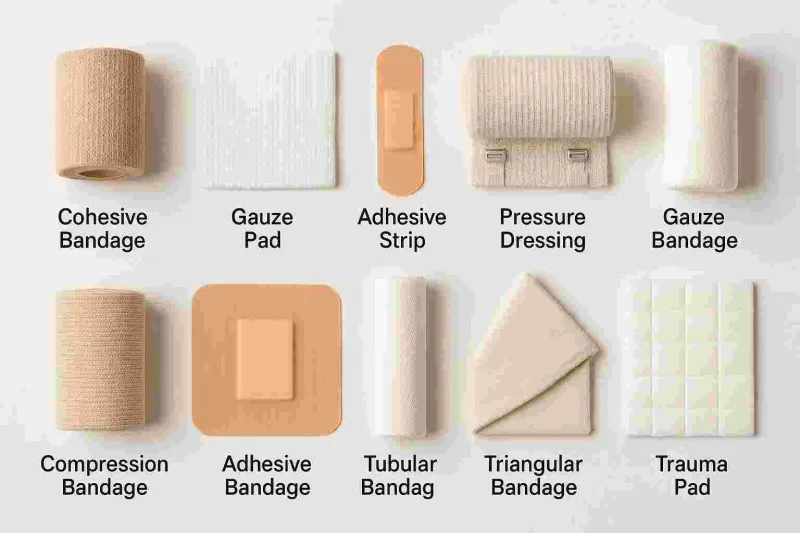
Photo: wound care products antibiotic ointment bandages first aid comparison, via aidel.com.my
The Wound Care Aisle Has Changed. Have Your Habits?
For decades, the American household wound care routine followed a familiar script: clean the cut, apply Neosporin, cover with a Band-Aid. That triple antibiotic ointment—a combination of neomycin, polymyxin B, and bacitracin—became as iconic as the medicine cabinet itself. But walk down the wound care aisle of any major pharmacy today and the landscape looks dramatically different. Silver-infused dressings, iodine-impregnated gauze, manuka honey gel, and hydrocolloid bandages now compete for shelf space alongside the classics.
The proliferation of options raises a legitimate question: are these newer technologies genuinely superior, or is the original ointment still the best tool for the job? The honest answer is that it depends—on the wound type, the patient's health status, the environment, and the stage of healing. Understanding those distinctions is what separates effective home wound management from guesswork.
Traditional Topical Antibiotic Ointments: What They Do Well
Products like Neosporin and its generic equivalents remain clinically useful for a specific and important reason: they combine broad-spectrum antibacterial coverage with a petrolatum base that keeps wounds moist. Research consistently shows that moist wound healing environments reduce scarring, accelerate epithelialization (the process of new skin forming), and decrease pain compared to wounds left to dry out.
For minor cuts, small lacerations, and superficial abrasions—the everyday injuries that account for the vast majority of home wound care—triple antibiotic ointment performs well. It is inexpensive, widely available, and effective at preventing the bacterial colonization that can turn a small scrape into an infected wound.
However, neomycin—one of the three active components—is among the more common causes of contact dermatitis in the United States. The American Contact Dermatitis Society has repeatedly flagged neomycin as a significant allergen. Consumers who notice increased redness, itching, or swelling after application may be experiencing an allergic reaction rather than an infection, and should discontinue use. In those cases, plain bacitracin ointment (without neomycin) or a non-antibiotic moisture barrier may be preferable.
Silver-Infused Dressings: Serious Technology for Serious Wounds
Colloidal silver and silver-impregnated dressings represent a meaningful step up in antimicrobial potency—and a corresponding step up in appropriate use cases. Silver ions disrupt bacterial cell membranes and interfere with cellular respiration across a remarkably broad spectrum of pathogens, including methicillin-resistant Staphylococcus aureus (MRSA) and Pseudomonas aeruginosa, two organisms that are notoriously difficult to treat with conventional topical antibiotics.
For deeper wounds, burns, heavily exuding wounds, or injuries at elevated infection risk—such as puncture wounds, bites, or lacerations in individuals with diabetes or compromised circulation—silver dressings offer meaningful advantages. Products such as Mepilex Ag and various silver-alginate dressings are increasingly available in retail and online settings, though many of the most effective formulations remain in clinical or prescription-adjacent territory.
The caveat: silver dressings are not necessary for minor, clean, low-risk wounds. They are more expensive, less convenient to apply correctly, and in some formulations can impair the migration of fibroblasts (cells essential to tissue repair) if used in wounds that are already healing well. Matching the tool to the wound matters.
Iodine-Based Products: A Classic Reconsidered
Povidone-iodine solutions and iodine-impregnated dressings occupy an interesting middle ground. Older-generation iodine preparations—particularly full-strength Betadine solution—fell out of favor in wound care circles because concentrated iodine was found to be cytotoxic, meaning it could damage the very cells responsible for healing.
Modern slow-release iodine formulations, however, have largely addressed this concern. Cadexomer iodine dressings, for example, release iodine gradually as the dressing absorbs wound exudate, maintaining antimicrobial activity without the tissue-damaging concentrations of older products. These are particularly effective for chronic or slow-healing wounds where biofilm formation—a protective matrix that bacteria build to resist treatment—is a concern.
For everyday home use, diluted povidone-iodine (approximately 0.5 percent) is considered acceptable for initial wound cleansing in high-contamination scenarios, such as injuries sustained outdoors in soil or animal contact situations. It should not be used as an ongoing wound dressing solution.
Medical-Grade Honey: Surprising Science Behind an Ancient Remedy
Manuka honey, derived from the nectar of the Leptospermum scoparium plant native to New Zealand and Australia, has accumulated a substantial body of clinical evidence supporting its use in wound management. Its antimicrobial action operates through multiple mechanisms: high osmolarity that draws fluid from bacterial cells, hydrogen peroxide generation, and a compound called methylglyoxal (MGO) that provides antimicrobial activity independent of peroxide.
FDA-cleared medical-grade honey products (such as Medihoney) are available in US retail settings and online. They are particularly well-suited to burns, abrasions, and wounds prone to infection where a non-antibiotic antimicrobial approach is preferred—including in patients concerned about antibiotic resistance or those with known sensitivities to conventional topical antibiotics.
Important distinction: raw honey from a grocery store is not equivalent to medical-grade manuka honey. Retail honey is not sterile, may contain spores of Clostridium botulinum, and has no standardized antimicrobial activity. Only purpose-formulated, sterilized medical honey products should be used on wounds.
Matching Product to Wound: A Practical Framework
| Wound Type | Recommended Approach |
|---|---|
| Minor cut or scrape, low contamination | Triple antibiotic ointment + adhesive bandage |
| Minor wound with neomycin sensitivity | Plain bacitracin or medical honey gel |
| Burn (minor, superficial) | Medical-grade honey or silver dressing |
| Puncture wound or bite | Clean thoroughly; seek professional evaluation |
| Deep laceration or wound with heavy drainage | Silver-alginate dressing; consider professional care |
| Chronic or slow-healing wound | Cadexomer iodine or medical honey; professional oversight recommended |
When Home Care Is Not Enough
No wound care product—regardless of its antimicrobial sophistication—substitutes for professional medical evaluation when certain warning signs are present. Seek care promptly if a wound shows increasing redness spreading beyond the wound margins, warmth, swelling, purulent (pus-containing) discharge, red streaking, fever, or failure to begin closing after 48 to 72 hours of proper home care.
Deep lacerations that may require sutures, wounds involving the face or hands, injuries from animal bites, and any wound in a person with diabetes, peripheral vascular disease, or immunosuppression warrant professional assessment rather than extended home management.
Informed Choices, Better Outcomes
The expansion of antimicrobial wound care technology is genuinely good news for American consumers—but only when that technology is applied thoughtfully. Triple antibiotic ointments remain a solid first-line choice for the minor injuries that make up most of everyday life. Silver dressings, iodine formulations, and medical honey each fill specific niches where conventional ointments fall short.
At AntibioticSource500, we believe the best wound care decision is an educated one—grounded in evidence, matched to the actual injury at hand, and respectful of the boundaries where self-care ends and professional treatment must begin.